
- 01 Why This Update Matters
- 02 What Google's New AI Search Report Includes
- 03 The Biggest Change for SEO Professionals
- 04 Does This Mean AEO and GEO Are Becoming Real?
- 05 What This Means for Content Creators
- 06 The Challenge Nobody Is Talking About
- 07 Why Google Is Making This Move Now
- 08 How SEOs Should Prepare Today
- 09 The Future of Search Reporting
- 10 Final Thoughts
- 11 FAQs
Why This Update Matters
For years, SEO professionals have been asking the same question: "How can we measure visibility in AI search results?"
When Google introduced AI Overviews and later expanded AI-powered search experiences, website owners could see changes in traffic, impressions, and rankings, but they couldn't clearly identify whether those visits came from traditional search results or AI-generated experiences.
That may finally be changing.
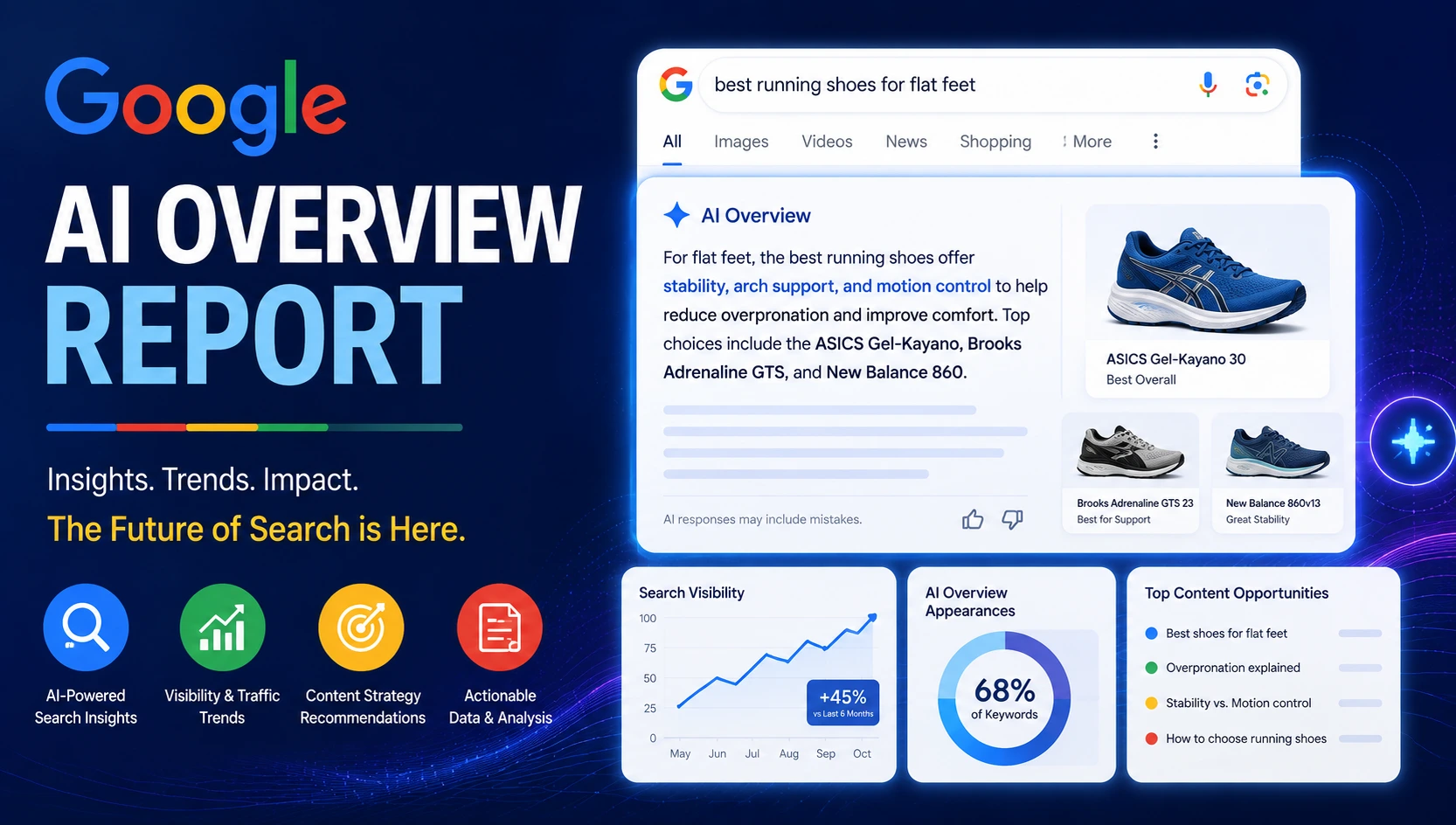
Google is now testing dedicated AI Search reporting inside Google Search Console, giving website owners a way to understand how their content performs within AI-powered search experiences. While the feature is currently being rolled out to a limited group of users, it signals a major shift in how search performance will be measured moving forward.
Bottom Line
Search is no longer just about ranking on Page 1. Today, users increasingly receive answers directly from AI Overviews, AI Mode, generative AI features in Discover, and AI-powered search assistants.
As a result, many websites have struggled to answer questions such as:
- Is my content appearing in AI Overviews?
- Which pages are being cited by AI?
- How much visibility am I getting from AI search experiences?
- Are my optimization efforts for AI search actually working?
Until now, Google Search Console grouped AI-related visibility into standard search data, making it difficult to separate traditional SEO performance from AI search performance.
What Google's New AI Search Report Includes
According to early reports and announcements, the new Search Console section will provide dedicated reporting for generative AI search experiences.
Website owners may be able to see:
- AI Search Impressions — The number of times their content appeared within AI-generated search experiences.
- AI Visibility by Page — Which URLs are being surfaced or referenced in AI-generated responses.
- Device-Level Data — Performance breakdowns across desktop and mobile users.
- Country-Level Insights — Visibility data segmented by geographic regions.
- Historical Performance Trends — Daily, weekly, and monthly reporting to help track AI search visibility over time.
Important Note
These features are currently in testing with a limited group of websites. The full rollout timeline and exact metrics may evolve before general availability.
The Biggest Change for SEO Professionals
This update effectively creates a new measurement layer for search.
Traditionally, SEO success was measured through:
- Rankings
- Clicks
- Organic traffic
- Conversions
Now, a new metric enters the conversation: AI Visibility.
In the coming years, brands may start reporting:
- AI impressions
- AI citations
- AI Overview appearances
- AI-driven brand mentions
Key Insight
Just as rankings became a KPI in traditional SEO, AI visibility may become a KPI for the next generation of search optimization.
Does This Mean AEO and GEO Are Becoming Real?
The SEO industry has recently introduced terms like:
- AEO (Answer Engine Optimization)
- GEO (Generative Engine Optimization)
- AI SEO
Many marketers debated whether these were simply new names for SEO.
Google's decision to provide dedicated AI reporting suggests that generative search visibility is becoming distinct enough to measure separately.
That doesn't mean traditional SEO is dead. Instead, it confirms that search optimization is evolving.
Businesses now need to optimize for:
- Traditional Search Results — Ranking webpages in Google's organic listings.
- AI Search Experiences — Appearing as a trusted source inside AI-generated answers.
What This Means
The websites that succeed in both areas will likely dominate future search visibility. Ignoring either channel means leaving visibility on the table.
What This Means for Content Creators
If your content appears in AI-generated answers, Google is signaling that it considers your website a trusted source.
That means content creators should focus more on:
- Topical Authority — Cover subjects comprehensively rather than creating isolated articles.
- Expertise — Demonstrate real-world knowledge and experience.
- Clear Answers — Answer questions directly and clearly.
- Structured Content — Use logical headings and organized information.
- Brand Building — AI systems increasingly rely on trusted entities and recognized brands when generating responses.
Content Creator Priority
Focus on becoming the definitive source on your topic. AI systems prioritize content that demonstrates depth, accuracy, and authority.
The Challenge Nobody Is Talking About
While the new reports are exciting, they may not solve every problem.
Many SEO professionals were hoping for data such as:
- Queries that triggered AI citations
- Position within AI responses
- Brand mention frequency
- Citation share compared to competitors
Early discussions suggest that the first version may focus primarily on visibility metrics rather than detailed citation intelligence.
The Reality
Marketers may still need third-party AI visibility tools to gain deeper competitive insights beyond what Google's initial reports provide.
Why Google Is Making This Move Now
The timing is not surprising.
Google has heavily invested in AI-powered search experiences over the last two years.
Recent updates include:
- Expansion of AI Overviews
- Growth of AI Mode
- Increased AI-powered search interactions
- More links and citations inside AI responses
- AI-first search experiences showcased at Google I/O 2026
As AI becomes a larger part of search, website owners naturally want reporting that reflects how users are discovering content.
Without dedicated reporting, measuring AI search performance would remain largely guesswork.
Why Now?
Google I/O 2026 signaled a clear shift toward AI-first search. Providing measurement tools helps maintain trust with publishers and gives the SEO industry data to adapt strategies.
How SEOs Should Prepare Today
Whether you have access to the new report or not, the strategy remains clear.
- Build Authority — Become the best source on your topic.
- Create Helpful Content — Answer real questions users are asking.
- Focus on Entities — Build recognition for your brand, authors, and expertise.
- Improve Content Structure — Use clear headings, summaries, FAQs, and supporting evidence.
- Monitor AI Visibility — Track when your content appears in AI Overviews and generative search results.
Start Today
The brands that start adapting today will be in a stronger position as AI reporting becomes widely available.
The Future of Search Reporting
This update could become one of the most important Search Console changes in years.
For the first time, Google is acknowledging that visibility inside AI-generated answers deserves its own measurement framework.
The industry is moving beyond a world where success is measured only by rankings and clicks.
The next generation of SEO may focus on a broader question:
"Is your brand being recommended by AI?"
If Google's AI Search reports continue to evolve, marketers will finally have data to answer that question.
Final Thoughts
Google's AI Search reporting isn't just another Search Console update.
It's a signal that search is changing.
Traditional rankings will still matter, but visibility within AI-generated answers is becoming increasingly important.
For SEO professionals, content creators, and business owners, the message is clear:
Don't just optimize for search engines. Optimize to become a source that AI systems trust, cite, and recommend.
Those who do will be best positioned for the future of search.
The Winning Strategy
Integrate both Traditional SEO and AI SEO into a single search visibility strategy. The websites that succeed in both areas will dominate future search.
FAQs
What is Google's new AI Search report in Search Console?
It's a new reporting feature being tested that provides visibility data for AI-powered search experiences such as AI Overviews and AI Mode.
Is the AI Search report available to everyone?
No. Google is currently testing the feature with a limited number of websites before a wider rollout.
Will AI Search reporting replace traditional SEO metrics?
No. Traditional SEO metrics such as clicks, impressions, and rankings remain important. AI reporting adds another layer of performance measurement.
How can I improve visibility in AI search results?
Focus on expertise, topical authority, helpful content, strong site structure, and building a trusted brand presence.
Does appearing in AI search results guarantee more traffic?
Not necessarily. Visibility may increase, but user behavior in AI-powered search experiences is still evolving. Research suggests AI-generated answers can affect click-through rates differently depending on search intent.