- 01 Quick Answer
- 02 The Search Landscape Has Changed
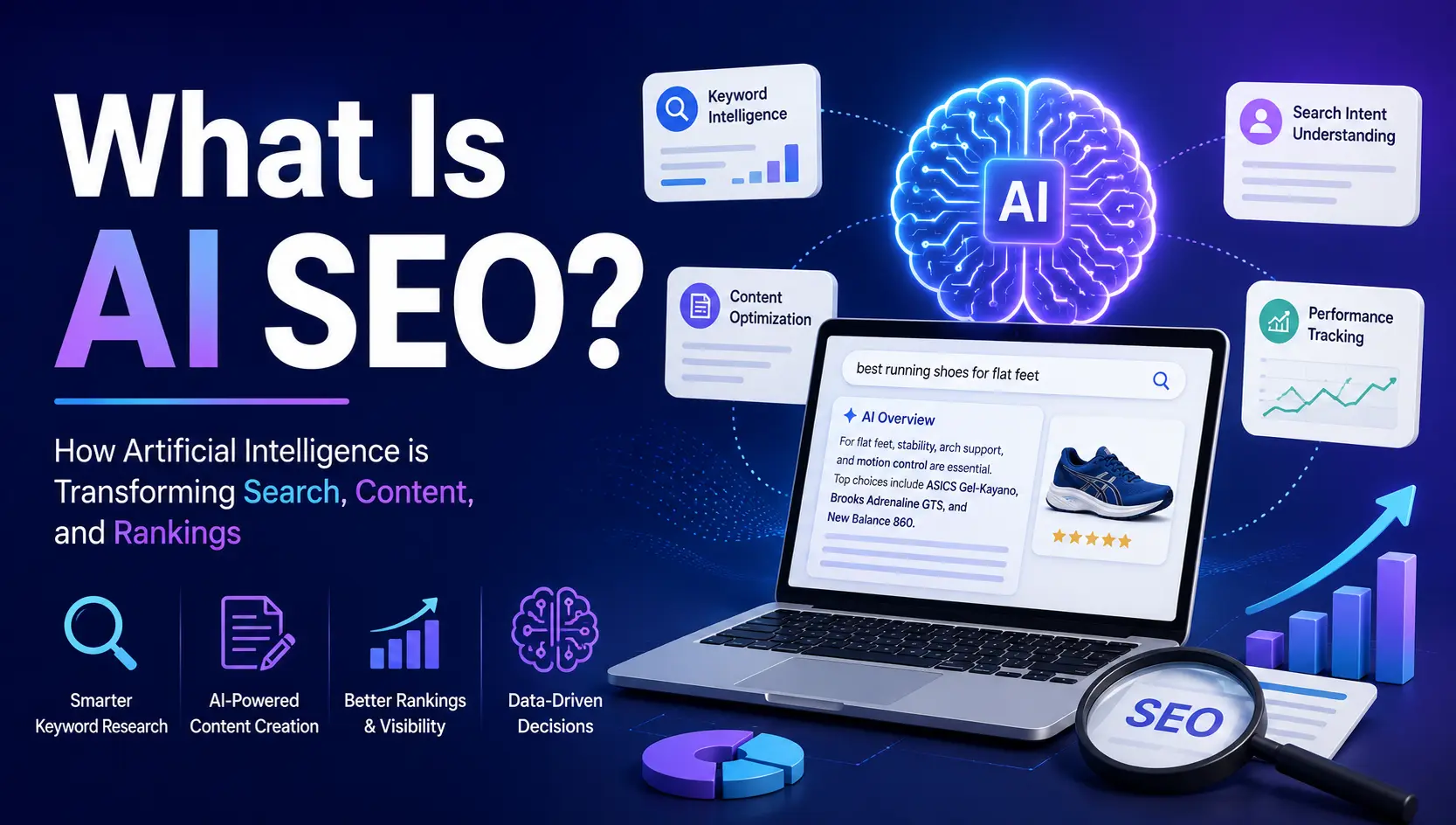
- 03 What Is AI SEO?
- 04 Why AI SEO Matters for Business Owners
- 05 How AI Search Works
- 06 Traditional SEO vs AI SEO
- 07 How AI Systems Choose Sources
- 08 The Core Components of AI SEO
- 09 Real Example of AI SEO
- 10 Common AI SEO Mistakes
- 11 How to Optimize Your Website for AI SEO
- 12 Will AI SEO Replace Traditional SEO?
- 13 The Future of AI SEO
- 14 Final Thoughts
- 15 Frequently Asked Questions
Quick Answer
AI SEO (Artificial Intelligence Search Optimization) is the process of optimizing your website, content, and brand so that AI-powered search engines and AI assistants can understand, trust, cite, and recommend your business in their generated answers.
Unlike traditional SEO, which focuses primarily on ranking webpages in search results, AI SEO focuses on increasing visibility across AI-powered platforms such as ChatGPT, Google's AI Overviews, Gemini, Perplexity, Copilot, and future AI search experiences.
For business owners, AI SEO is becoming an essential part of digital marketing because more users are receiving answers directly from AI systems instead of clicking traditional search results.
Key Takeaway
AI SEO helps AI systems recommend your content and brand — not just rank your webpage higher in traditional search results.
The Search Landscape Has Changed
A few years ago, the customer journey looked simple:
- Search on Google
- Click a website
- Read content
- Make a decision
Today, that journey is evolving.
Users now ask questions like:
- What is the best CRM software for startups?
- Which SEO agency should I hire?
- How much does web development cost?
- What are the best project management tools?
Instead of displaying only website links, AI-powered search platforms generate direct answers. These answers often summarize information from multiple trusted sources. This shift is why AI SEO has become one of the most discussed topics in digital marketing in 2026.
What Is AI SEO?
AI SEO is the practice of optimizing digital content so that AI systems can easily understand, verify, and reference it when generating answers.
The goal is not just ranking on Google. The goal is becoming a trusted source that AI platforms choose to cite.
Think of it this way:
Traditional SEO Goal vs AI SEO Goal
Traditional SEO Goal: "Help my webpage rank higher."
AI SEO Goal: "Help AI systems recommend my content and brand."
The most successful businesses now focus on both.
Why AI SEO Matters for Business Owners
Many business owners still believe AI search only affects technology companies. That's a mistake. Every industry is being impacted.
Whether you're a:
- Local business
- SaaS company
- Ecommerce store
- Law firm
- Healthcare provider
- Marketing agency
- Manufacturing company
Your potential customers are already using AI tools to research products, services, and solutions. If AI systems don't recognize your brand as a trusted source, you may lose visibility to competitors who have adapted.
Don't Wait to Adapt
Businesses that establish authority today will have a significant advantage tomorrow as AI search continues to grow.
How AI Search Works
When a user asks an AI platform a question, the system attempts to:
- Understand Intent — What is the user actually trying to learn?
- Find Relevant Sources — Which websites provide trustworthy information?
- Evaluate Authority — Which sources appear credible and reliable?
- Generate an Answer — The AI combines information from trusted sources into a conversational response.
This means your content needs to be:
- Accurate
- Helpful
- Well-structured
- Authoritative
- Easy to understand
Traditional SEO vs AI SEO
The future belongs to businesses that combine both strategies. Here is how they compare:
| Traditional SEO | AI SEO |
|---|---|
| Focuses on rankings | Focuses on AI visibility |
| Targets keywords | Targets topics and entities |
| Measures traffic | Measures citations and mentions |
| Optimizes pages | Optimizes knowledge and authority |
| Relies heavily on backlinks | Relies on authority, trust, and relevance |
Combine Both Strategies
The most successful businesses in 2026 invest in both Traditional SEO and AI SEO as complementary strategies rather than choosing one over the other.
How AI Systems Choose Sources
One of the biggest misconceptions is that AI simply selects the highest-ranking webpage. That's not always true.
AI systems often prioritize:
- Expertise: Does the content demonstrate real knowledge?
- Authority: Is the website recognized within its industry?
- Trustworthiness: Can the information be trusted?
- Content Quality: Is the information useful and accurate?
- Brand Recognition: Does the brand have a positive online presence?
- Topical Depth: Does the website comprehensively cover the topic?
This is why smaller websites with highly specialized expertise can sometimes outperform larger competitors in AI-generated answers.
The Core Components of AI SEO
1. Topical Authority
Instead of publishing random articles, create comprehensive content around your niche.
Example: If you offer SEO services, cover topics such as:
- Technical SEO
- Local SEO
- Ecommerce SEO
- Link Building
- SEO Audits
- AI SEO
- Search Console
- Content Marketing
The more complete your coverage, the more likely AI systems will view you as an authority.
2. Entity Optimization
AI systems increasingly rely on entities. An entity can be:
- A business
- A person
- A product
- A service
- A location
Your brand should have consistent information across your website, social profiles, business directories, and industry publications. This helps AI understand who you are.
3. EEAT Signals
Google emphasizes:
- Experience
- Expertise
- Authoritativeness
- Trustworthiness
Strong EEAT improves both traditional SEO and AI SEO. Ways to strengthen EEAT include:
- Author bios
- Case studies
- Customer reviews
- Industry certifications
- Original research
4. Structured Content
AI systems prefer content that is easy to interpret. Use:
- Clear headings
- Bullet points
- FAQs
- Tables
- Definitions
- Examples
Well-structured content increases the chances of being referenced.
5. Brand Mentions
Backlinks remain valuable, but AI systems also pay attention to brand mentions. Being discussed across industry websites, news publications, forums, podcasts, and social media can strengthen your authority.
Real Example of AI SEO
Imagine you own a web development company.
Without AI SEO
You publish a service page targeting: "Web Development Company"
With AI SEO
You create supporting content such as:
- What Does a Web Development Company Do?
- Website Development Cost Guide
- Custom vs Template Websites
- How Long Does Website Development Take?
- Website Development Trends in 2026
Now AI systems have significantly more information connecting your brand to website development expertise. This improves the likelihood of being cited or recommended.
Build Topic Depth
The more comprehensive content you create around a topic, the more likely AI systems are to view you as a trusted authority and cite your brand in answers.
Common AI SEO Mistakes
- Focusing Only on Keywords — AI systems understand context, not just keywords.
- Publishing Thin Content — Short, generic articles rarely build authority.
- Ignoring Brand Building — Strong brands are referenced more often.
- Using AI Content Without Human Expertise — AI-generated content should be reviewed and improved by experts.
- Neglecting Technical SEO — A poorly structured website limits visibility.
Avoid Generic AI Content
Content created purely by AI without expert review often lacks the depth, accuracy, and originality that both search engines and AI systems reward.
How to Optimize Your Website for AI SEO
- Create Helpful Content — Answer real questions your customers ask.
- Build Topic Clusters — Cover subjects comprehensively.
- Improve Website Structure — Use clear navigation and internal linking.
- Demonstrate Expertise — Add author information, case studies, and original insights.
- Build Brand Authority — Increase mentions across reputable websites.
- Keep Content Updated — Fresh information improves trust and relevance.
Will AI SEO Replace Traditional SEO?
No. Traditional SEO remains essential because search engines still drive significant traffic.
However, AI SEO is becoming an additional layer of optimization.
Think of it like this:
The Relationship Between SEO and AI SEO
Traditional SEO helps users find your website.
AI SEO helps AI systems recommend your website.
The businesses that win in 2026 and beyond will invest in both.
The Future of AI SEO
Over the next few years, businesses will likely track metrics such as:
- AI citations
- AI visibility
- AI mentions
- AI referral traffic
- AI search impressions
As AI search continues to evolve, optimization strategies will also evolve. One thing is already clear:
Businesses that establish authority today will have a significant advantage tomorrow.
Final Thoughts
AI SEO is not a replacement for SEO. It is the next evolution of search optimization.
As users increasingly rely on AI-powered platforms for information, businesses need to ensure their content is discoverable, trustworthy, and valuable to both humans and AI systems.
The companies that focus on expertise, authority, quality content, and strong brand signals will be best positioned to succeed in the AI-driven search landscape.
If you're a business owner, now is the right time to start optimizing not just for search engines — but for AI recommendations as well.
Start Now
Early adopters of AI SEO will gain a lasting competitive advantage as AI search becomes the dominant way users discover businesses online.
Frequently Asked Questions
What does AI SEO mean?
AI SEO refers to optimizing content and websites so AI-powered search engines and assistants can understand, trust, and recommend them in generated answers.
Is AI SEO different from traditional SEO?
Yes. Traditional SEO focuses on rankings and traffic, while AI SEO focuses on visibility within AI-generated responses and recommendations.
Can small businesses benefit from AI SEO?
Absolutely. AI systems often prioritize expertise and relevance, allowing smaller businesses to compete with larger brands.
Does AI SEO require technical SEO?
Yes. Technical SEO remains important because AI systems rely on properly structured websites to understand content.
What are the most important AI SEO ranking factors?
Key factors include topical authority, EEAT, content quality, brand recognition, structured content, and trust signals.
How can I improve my chances of appearing in AI-generated answers?
Create comprehensive content, answer user questions clearly, demonstrate expertise, build authority, and maintain a strong online brand presence.
Is AI SEO worth investing in during 2026?
Yes. As AI-powered search continues to grow, businesses that optimize early can gain a significant competitive advantage.